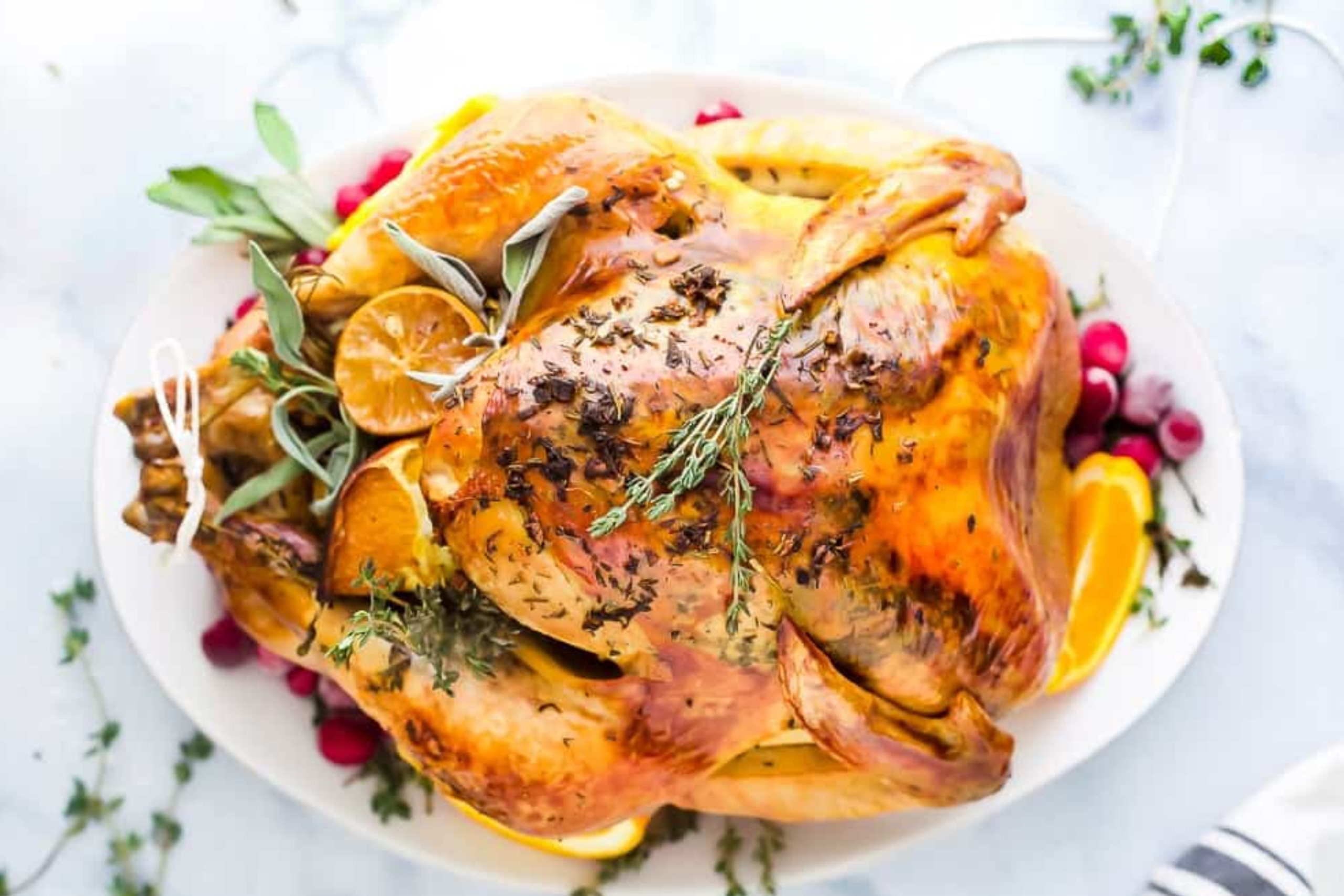
A beautifully roasted turkey is often the centrepiece of a traditional Thanksgiving dinner. Whether you’re hosting your first Thanksgiving or preparing a holiday meal for family and friends, having a reliable turkey recipe makes the entire cooking process much easier. The goal is to achieve golden, crispy skin on the outside while keeping the meat tender, juicy, and full of flavour on the inside.
This easy Thanksgiving turkey recipe uses a simple combination of fresh herbs, garlic, lemon, onion, and homemade herb butter to create a deliciously seasoned roast turkey. The butter is rubbed both underneath the skin and over the outside, helping the meat stay flavourful while giving the skin a beautiful golden finish.
You don’t need complicated ingredients, special marinades, or advanced cooking techniques to prepare an impressive Thanksgiving turkey. With a little preparation, the right oven temperature, and a meat thermometer, you can make a delicious holiday roast that everyone will look forward to enjoying.
Whether you’re serving it alongside creamy mashed potatoes, roasted vegetables, homemade stuffing, cranberry sauce, or traditional turkey gravy, this recipe is a wonderful addition to your Thanksgiving menu.
Why You’ll Love This Easy Thanksgiving Turkey Recipe
There are plenty of ways to prepare a holiday turkey, but this herb-butter version keeps things simple without compromising on flavour.
Here are a few reasons to add this recipe to your Thanksgiving dinner menu:
- Simple ingredients: You only need a handful of everyday ingredients, including butter, garlic, fresh herbs, lemon, and vegetables.
- Juicy and tender meat: Herb butter underneath the turkey skin helps season the breast meat and adds richness as the turkey roasts.
- Beautiful golden skin: The butter mixture helps the outside develop an appealing golden-brown finish.
- Fresh herb flavour: Rosemary, thyme, and sage create a classic savoury flavour that works beautifully with roasted turkey.
- Perfect for Thanksgiving: This recipe makes a generous holiday centrepiece for family dinners and larger gatherings.
- Easy preparation: Most of the work involves preparing the turkey, mixing the butter, and letting the oven do the cooking.
Ingredients for Easy Thanksgiving Turkey
This recipe uses three simple ingredient groups: the turkey and its aromatics, the homemade herb butter, and optional vegetables for the roasting pan.
1. Roast Turkey
- 12 to 18-pound turkey: Choose a fully thawed whole turkey. This size is suitable for a traditional Thanksgiving gathering. Remove the giblets before seasoning.
- 1 onion: Peel and quarter the onion to add aroma and flavour inside the turkey cavity.
- 1 lemon: Quarter the lemon to bring a subtle citrus flavour to the roast.
- 1 to 2 sprigs fresh rosemary: Rosemary adds an earthy, fragrant flavour that pairs well with turkey.
- 1 to 2 sprigs fresh thyme: Thyme provides a mild herbal flavour that complements the butter.
- 1 to 2 sprigs fresh sage: Sage is a classic holiday herb that gives roasted turkey a warm, savoury taste.
- Kosher salt and black pepper: Use these to season the cavity and bring out the natural flavour of the turkey.
2. Homemade Herb Butter
The herb butter is one of the most important parts of this recipe. It adds flavour to the turkey and helps create a deliciously seasoned exterior.

Source: garnishandglaze
- ¾ cup unsalted butter: Use softened butter at room temperature so it’s easy to mix and spread.
- 6 garlic cloves: Mince the garlic finely to distribute its flavour throughout the butter.
- 1 teaspoon kosher salt: Adds seasoning to the butter mixture.
- ½ teaspoon black pepper: Provides a gentle peppery flavour.
- 1 tablespoon finely chopped fresh rosemary: Adds an aromatic, earthy taste.
- 1 tablespoon finely chopped fresh thyme: Complements the garlic and butter with a fresh herbal flavour.
3. Vegetables Under the Turkey (Optional but Recommended)
Adding vegetables underneath the turkey is a simple way to create a flavourful base for roasting.
- 1 onion: Peel and quarter it before placing it in the roasting pan.
- 3 celery ribs: Roughly chop the celery into large pieces.
- 2 carrots: Roughly chop the carrots to add natural sweetness.
These vegetables help elevate the turkey above the bottom of the roasting pan if you don’t have a roasting rack. They also add flavour to the pan drippings, which can be used when preparing homemade turkey gravy.
How to Make Easy Thanksgiving Turkey
Preparing a Thanksgiving turkey might seem like a big task, especially if you’re cooking one for the first time. However, breaking the process into simple steps makes it much easier to manage.
Follow these instructions for a flavourful, tender, and beautifully roasted turkey.
Step 1: Prepare the Turkey
Start by removing the turkey from the refrigerator approximately one hour before roasting. Keep it properly handled and don’t leave it sitting at room temperature for longer than two hours in total.
Remove the giblets from inside the turkey cavity and set them aside if you plan to use them for gravy or discard them.
Pat the turkey completely dry using paper towels. Drying the skin is important because excess moisture can prevent it from becoming nicely browned during roasting.
Before moving to the next step, check that the turkey is fully thawed and ready to cook.
Step 2: Fill the Turkey Cavity
Preheat your oven to 325°F (160°C).
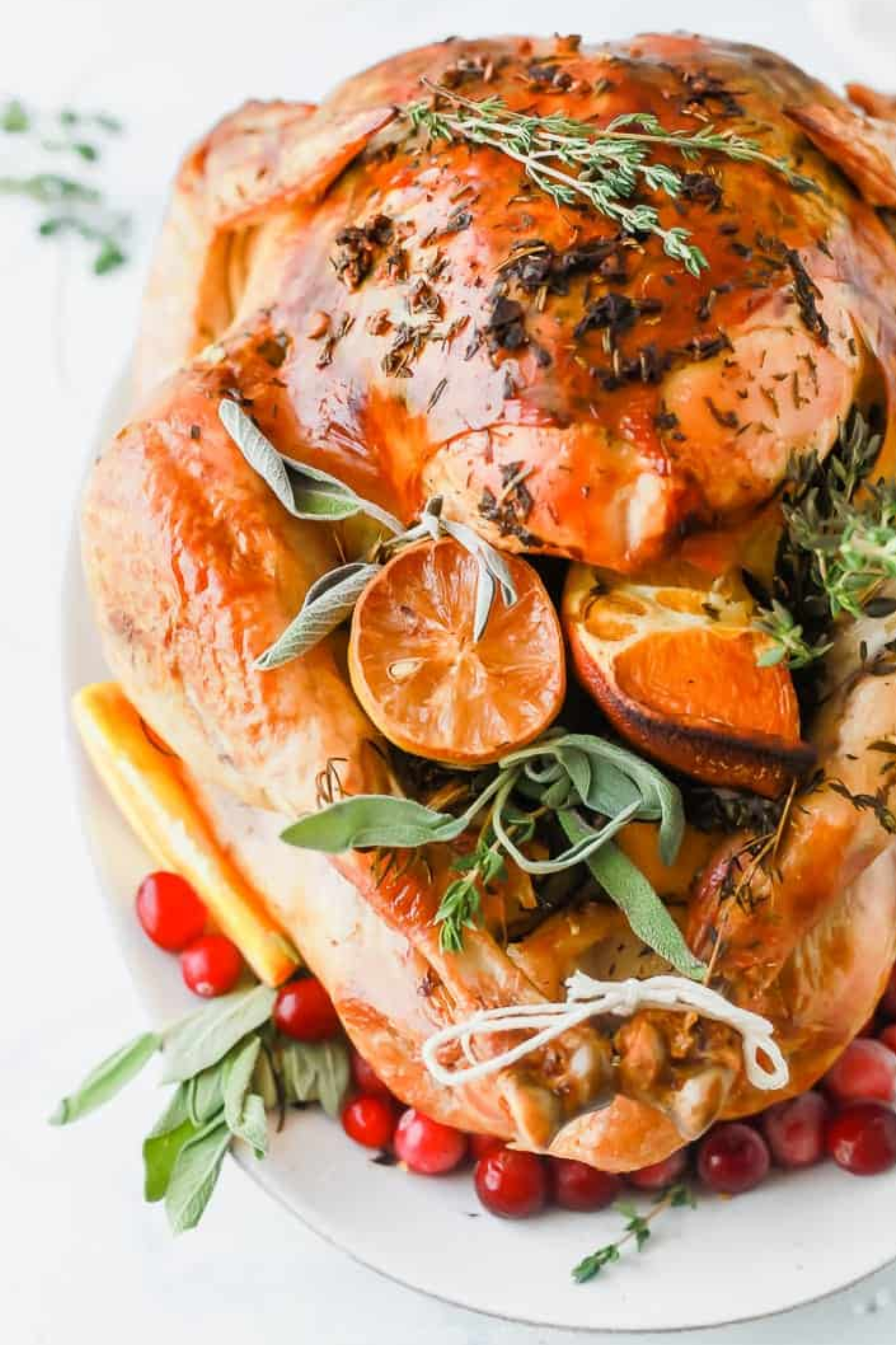
Season the inside of the turkey cavity with kosher salt and black pepper. Add the quartered onion, lemon, fresh rosemary, thyme, and sage.
These aromatics help create a lovely fragrance and add subtle flavour while the turkey roasts.
Avoid packing the cavity too tightly. Leaving enough space allows heat to circulate more effectively inside the bird.
Remember that aromatics are different from stuffing. If you want to cook traditional bread stuffing, prepare it separately in a baking dish or follow a safe stuffing-specific cooking method.
Source: joyfulhealthyeats
Step 3: Prepare the Garlic Herb Butter
Take a small mixing bowl and add the softened unsalted butter.
Add the minced garlic, kosher salt, black pepper, chopped rosemary, and chopped thyme.
Mix everything together using a spoon or spatula until the herbs and seasonings are evenly distributed throughout the butter.
The mixture should be soft enough to spread easily over the turkey. If the butter is too cold, allow it to soften a little longer before using it.
This homemade garlic herb butter is what gives the turkey its rich, savoury flavour.
Step 4: Rub the Herb Butter Under and Over the Skin
This step makes a noticeable difference to the final result.
Gently loosen the skin over the turkey breasts by sliding your fingers underneath it. Be careful not to tear the skin.
Take approximately one-third of the prepared herb butter and spread it underneath the skin, directly over the breast meat.
Then use the remaining butter to coat the outside of the turkey. Spread it evenly over the breast, legs, thighs, and other exposed areas.
Applying butter underneath the skin helps season the breast meat more directly, while the outer layer adds flavour and helps the skin brown during roasting.
Try to distribute the butter as evenly as possible rather than leaving large clumps in one area.
Step 5: Arrange the Turkey in a Roasting Pan
Place the turkey on a roasting rack inside a large roasting pan.
If you don’t have a roasting rack, arrange the chopped onion, celery, and carrots across the bottom of the pan and place the turkey on top.
You can also use both a rack and vegetables if your roasting pan is large enough.
Tuck the wing tips underneath the turkey to help prevent them from burning during the longer cooking process.
Make sure the turkey is positioned securely and has enough room around it for hot air to circulate.
Step 6: Roast the Turkey
Place the prepared turkey in the preheated oven at 325°F (160°C).
As a general planning estimate, allow approximately 15 minutes per pound, although actual cooking time can vary depending on the turkey, oven, and whether the bird is stuffed.
For a 12 to 18-pound turkey, this means planning for several hours of roasting.
You don’t need to baste the turkey constantly. Instead, allow it to roast undisturbed and monitor the skin as it cooks.
If the skin starts becoming too dark before the meat reaches a safe temperature, loosely cover the browned areas with aluminium foil.
The most important part of this step is checking the internal temperature with a reliable food thermometer.
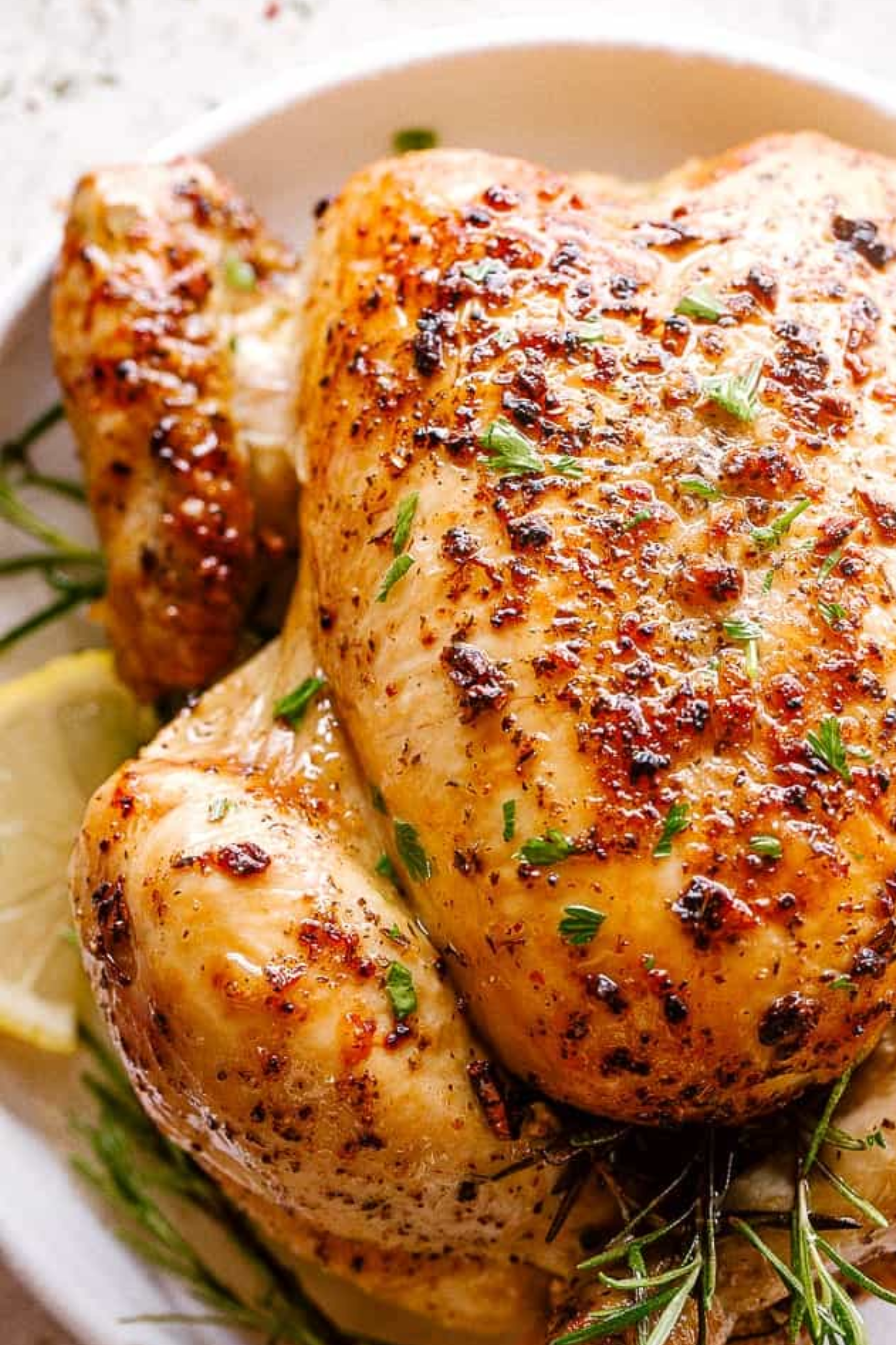
For food safety, the turkey must reach 165°F (74°C) in the thickest part of the breast and the innermost part of the thigh and wing. Avoid touching the bone when taking temperature readings.
Although some roasting methods remove the turkey slightly earlier to account for carryover cooking, the safest approach is to verify that all required areas have reached 165°F before serving.
Source: diethood
Step 7: Let the Turkey Rest Before Carving
Once the turkey reaches the required safe internal temperature, carefully remove it from the oven.
Transfer it to a suitable carving board or serving platter and allow it to rest for approximately 30 minutes before carving.
Resting gives the juices time to redistribute throughout the meat, helping the turkey remain moist when sliced.
You can loosely cover the turkey with aluminium foil to help retain warmth while it rests. Avoid wrapping it too tightly, as trapped steam can soften the crispy skin.
Use this resting time to finish preparing your side dishes, arrange the dinner table, or make homemade gravy using the roasting pan drippings.
Step 8: Carve and Serve
The final step is to carve the turkey and arrange the slices on a large serving platter.
Start by removing the legs and wings, then separate the breast meat from the bone. Slice the breast meat against the grain into even portions.
Arrange the slices neatly and garnish with fresh rosemary, lemon wedges, or a few roasted vegetables for an attractive holiday presentation.
Don’t forget to save the flavourful pan drippings. They make a wonderful starting point for homemade turkey gravy.
Serve the turkey while it’s warm alongside your favourite Thanksgiving side dishes.
How Long Does It Take to Cook a Thanksgiving Turkey?
Cooking time depends on the turkey’s weight, oven temperature, and whether the bird is stuffed. A 12 to 18-pound turkey roasted at 325°F (160°C) generally needs several hours.
The following estimates are useful for planning your Thanksgiving cooking schedule.
| Turkey weight | Approximate roasting time |
|---|---|
| 12 pounds | 3 hours |
| 14 pounds | 3 hours 30 minutes |
| 16 pounds | 4 hours |
| 18 pounds | 4 hours 30 minutes |
These are approximate planning estimates based on 15 minutes per pound, not guaranteed cooking times. Always use a food thermometer to confirm doneness.
A meat thermometer is much more reliable than judging doneness by the appearance of the skin or the cooking time alone.
Expert Tips for Making the Best Thanksgiving Turkey
A few small preparation details can make a big difference when roasting a whole turkey. Keep these tips in mind to help achieve a delicious result.
1. Make Sure the Turkey Is Fully Thawed
One of the most important preparation steps is allowing enough time for the turkey to thaw completely.
A frozen or partially frozen turkey can cook unevenly, leaving some areas undercooked while others become dry.
The safest method is refrigerator thawing. Allow approximately 24 hours for every 4 to 5 pounds of turkey, keeping it in its original packaging on a tray to catch any liquid.
For example, a 16-pound turkey may need around four days to thaw in the refrigerator.
2. Dry the Skin Before Adding Butter
Patting the turkey dry with paper towels helps remove excess moisture from the surface.
This is especially important if you want beautifully browned skin. A wet surface can create steam, making it more difficult for the skin to develop a crisp texture.
3. Use Softened Butter
Cold butter is difficult to spread evenly, particularly underneath the turkey skin.
Allow the butter to soften at room temperature before mixing it with the garlic and herbs.
This makes it easier to coat the turkey without damaging the skin.
4. Don’t Skip the Meat Thermometer
A beautifully browned turkey doesn’t necessarily mean the meat is fully cooked.
Using a food thermometer helps you check the internal temperature accurately and avoid serving undercooked poultry.
Check multiple areas, including the thickest part of the breast and the innermost thigh and wing.
The minimum safe temperature is 165°F (74°C).
5. Avoid Opening the Oven Too Often
Opening the oven repeatedly allows heat to escape and can increase cooking time.
Instead of checking the turkey every few minutes, allow it to roast and monitor it periodically, especially as it approaches the expected finishing time.
6. Allow Enough Resting Time
Carving the turkey immediately after removing it from the oven can cause some of the juices to escape onto the cutting board.
Allowing it to rest for around 30 minutes helps keep the meat moist and makes carving easier.
7. Prepare Your Side Dishes While the Turkey Rests
Thanksgiving dinner often includes several dishes, so using the resting period efficiently can make the entire meal easier to organise.
Prepare your gravy, warm your side dishes, arrange the serving platters, and get everything ready before carving.
What to Serve with Thanksgiving Turkey
A roasted turkey is delicious on its own, but pairing it with traditional Thanksgiving sides makes the meal even more enjoyable.
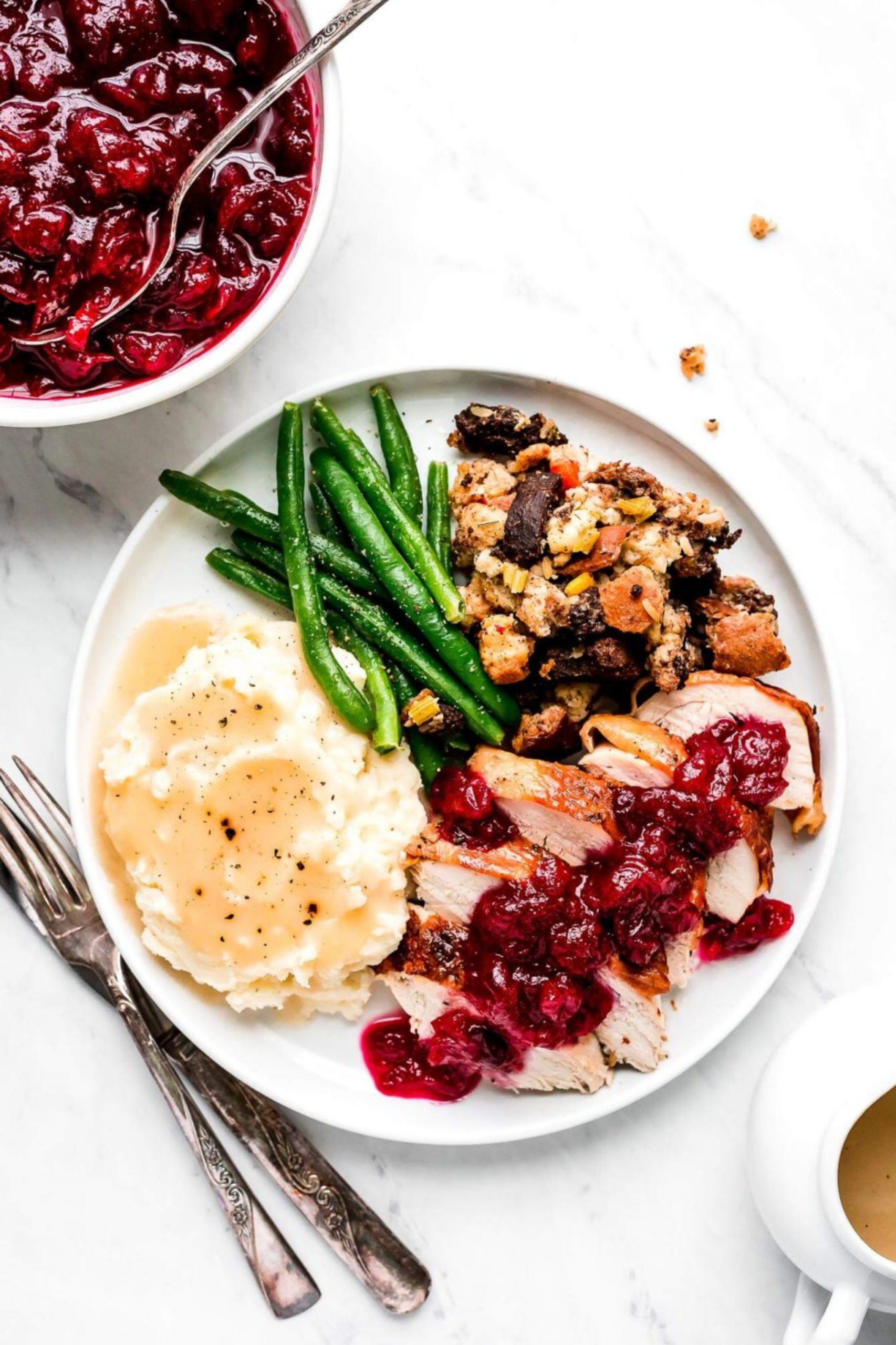
Source: garnishandglaze
Here are some popular options to serve alongside your herb-butter turkey:
- Mashed potatoes: Creamy mashed potatoes are a classic choice and taste wonderful with homemade turkey gravy.
- Cranberry sauce: Its sweet and slightly tangy flavour balances the richness of roasted turkey.
- Roasted vegetables: Carrots, Brussels sprouts, sweet potatoes, and green beans add colour and variety to the dinner table.
- Homemade stuffing: Traditional bread stuffing with herbs, celery, and onion makes a comforting holiday side.
- Dinner rolls: Soft, warm bread rolls are perfect for serving with gravy and leftover turkey.
- Mac and cheese: A creamy baked macaroni and cheese dish is a popular addition to many Thanksgiving menus.
- Sweet potato casserole: This sweet and creamy side dish brings another classic holiday flavour to the table.
You can also add a fresh green salad or a seasonal vegetable dish to balance out the richer sides.
How to Store Leftover Thanksgiving Turkey
If you have leftover turkey after Thanksgiving dinner, storing it properly makes it easier to enjoy in other meals.
Allow the turkey to cool slightly, then remove the meat from the bones and place it in shallow, airtight containers.
Refrigerate leftovers within two hours of cooking. Cooked turkey can generally be stored in the refrigerator for 3 to 4 days.
If you want to keep it longer, freeze the turkey in airtight freezer-safe containers or bags. For best quality, use frozen cooked turkey within approximately 2 to 6 months.
When reheating, make sure leftover turkey reaches an internal temperature of 165°F (74°C).
Avoid leaving cooked turkey sitting at room temperature for extended periods, particularly during holiday gatherings.
Easy Ways to Use Leftover Thanksgiving Turkey
Leftover turkey doesn’t have to mean eating the same dinner for several days. There are plenty of simple ways to turn it into new meals.
Here are a few ideas worth trying:
- Turkey sandwiches: Layer sliced turkey with cranberry sauce, lettuce, cheese, and your favourite bread.
- Creamy turkey soup: Add shredded turkey to a pot with vegetables, broth, and noodles for a comforting soup.
- Turkey pot pie: Combine leftover turkey with vegetables in a creamy filling and bake it under a golden pastry crust.
- Turkey salad: Mix chopped turkey with lettuce, cucumber, tomatoes, and a light dressing.
- Turkey wraps: Use sliced turkey with fresh vegetables, cheese, and your preferred sauce in a tortilla.
- Turkey fried rice: Add chopped turkey to cooked rice with vegetables, eggs, and seasoning for an easy meal.
These ideas make it easier to use your Thanksgiving leftovers while enjoying a little variety after the holiday.
Frequently Asked Questions About Easy Thanksgiving Turkey (FAQ)
What is the best temperature to cook a Thanksgiving turkey?
A temperature of 325°F (160°C) is a good choice for roasting a whole Thanksgiving turkey. It allows the bird to cook gradually while the skin develops a golden-brown colour. Always check the internal temperature with a food thermometer and make sure the breast, thigh, and wing reach 165°F (74°C).
How many people will a 12 to 18-pound turkey feed?
A 12 to 18-pound turkey can generally serve approximately 8 to 12 people, depending on portion sizes and the number of side dishes. If you want generous portions or plenty of leftovers, consider choosing a larger bird.
Should I put butter under the turkey skin?
Yes. Applying herb butter underneath the skin is a helpful way to season the breast meat directly. It also adds richness and helps distribute the garlic and fresh herb flavours throughout the turkey.
Do I need to baste the turkey while it cooks?
No, frequent basting isn’t necessary for this herb-butter recipe. The butter applied underneath and over the skin provides plenty of flavour. Opening the oven repeatedly to baste can also cause heat loss and extend cooking time.
How do I know when my Thanksgiving turkey is fully cooked?
The most reliable method is to use a food thermometer. Check the thickest part of the breast and the innermost part of the thigh and wing, making sure each area reaches 165°F (74°C). Avoid touching the bone when checking the temperature.
Can I prepare the herb butter ahead of time?
Yes. You can prepare the garlic herb butter a day or two in advance and store it in an airtight container in the refrigerator. Before using it, allow it to soften enough to spread easily.
Can I use dried herbs instead of fresh herbs?
Yes. Dried rosemary and thyme can be used if fresh herbs aren’t available. However, dried herbs are more concentrated, so use smaller quantities. Fresh herbs are particularly nice for this recipe because they provide a fragrant flavour and attractive presentation.
Should I cover the turkey with aluminium foil while roasting?
You don’t need to cover the turkey from the beginning. Allowing the skin to remain exposed helps it brown. If the skin becomes too dark before the turkey is fully cooked, loosely cover the browned areas with aluminium foil.
How long should a roasted turkey rest before carving?
Allow the turkey to rest for approximately 30 minutes before carving. This gives the juices time to redistribute and makes it easier to slice the meat without losing too much moisture.
Can I cook a turkey larger than 18 pounds using this recipe?
Yes. You can use a larger turkey, but you may need to increase the herb butter quantity and allow additional roasting time. The cooking time will depend on the bird’s weight and your oven, so use a thermometer rather than relying on the estimated time alone.
Can I stuff the turkey with bread stuffing?
You can cook stuffing inside a turkey, but it requires additional food-safety precautions. The centre of the stuffing must also reach 165°F (74°C). For easier and more predictable cooking, preparing stuffing separately in a baking dish is recommended.
How do I keep Thanksgiving turkey from drying out?
Start with a fully thawed turkey, apply herb butter underneath the skin, avoid overcooking, and allow the meat to rest before carving. Using a food thermometer is particularly important because cooking the turkey beyond the required temperature can make the meat dry.
Final Thoughts
Preparing a delicious Thanksgiving turkey doesn’t have to be complicated. With a fully thawed turkey, homemade garlic herb butter, fresh rosemary, thyme, and a few simple aromatics, you can create a beautiful holiday roast without spending the entire day managing complicated cooking steps.
The secret is to focus on a few important details: season the turkey properly, spread the herb butter underneath and over the skin, roast it at the right temperature, and use a meat thermometer to check when it’s ready. Giving the turkey enough time to rest before carving also helps keep the meat tender and juicy.
Serve it with classic Thanksgiving favourites such as mashed potatoes, cranberry sauce, roasted vegetables, and homemade gravy for a complete holiday meal.
Whether you’re preparing Thanksgiving dinner for a small family gathering or a larger celebration, this easy Thanksgiving turkey recipe is a wonderful place to start.
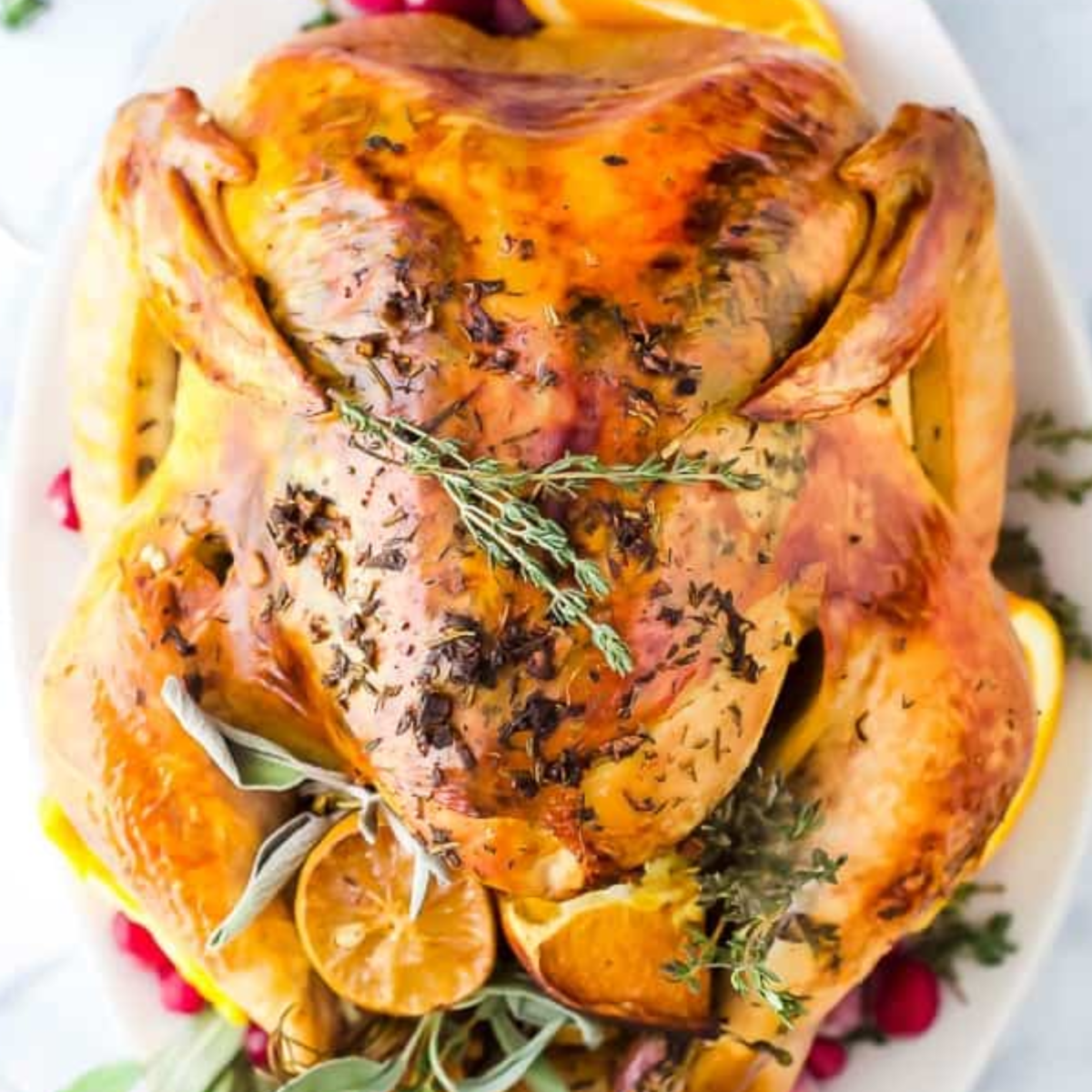
Easy Thanksgiving Turkey
Ingredients
For the Roast Turkey
- 1 whole turkey12 to 18 pounds, fully thawed
- 1 onionpeeled and quartered
- 1 lemonquartered
- 1 to 2 sprigs fresh rosemary
- 1 to 2 sprigs fresh thyme
- 1 to 2 sprigs fresh sage
- Kosher salt and black pepper
For the Herb Butter
- ¾ cup unsalted buttersoftened
- 6 garlic clovesminced
- 1 teaspoon kosher salt
- ½ teaspoon black pepper
- 1 tablespoon finely chopped fresh rosemary
- 1 tablespoon finely chopped fresh thyme
For the Roasting Pan
- 1 onionquartered
- 3 celery ribsroughly chopped
- 2 carrotsroughly chopped
Instructions
-
Remove the fully thawed turkey from the refrigerator approximately one hour before roasting, keeping food-safety time limits in mind. Remove the giblets and pat the turkey dry.
-
Preheat the oven to 325°F (160°C). Season the turkey cavity with salt and pepper, then add the onion, lemon, rosemary, thyme, and sage.
-
Mix the softened butter with minced garlic, salt, pepper, rosemary, and thyme in a small bowl.
-
Gently loosen the turkey breast skin and spread one-third of the herb butter underneath it. Rub the remaining butter over the outside of the turkey.
-
Place the turkey on a roasting rack or over the chopped onion, celery, and carrots in a roasting pan. Tuck the wing tips underneath.
-
Roast at 325°F (160°C), allowing approximately 15 minutes per pound as a planning estimate. Check the internal temperature with a food thermometer.
-
Ensure the thickest parts of the breast and the innermost thigh and wing reach 165°F (74°C).
-
Remove the turkey from the oven and rest for approximately 30 minutes before carving.
-
Slice and serve with homemade turkey gravy and your favourite Thanksgiving side dishes.
Notes
Make sure the turkey is completely thawed before roasting.
Don’t overfill the cavity with aromatics.
Use a meat thermometer rather than relying only on cooking time.
Cover the skin loosely with aluminium foil if it browns too quickly.
Refrigerate leftovers within two hours and use within 3 to 4 days.