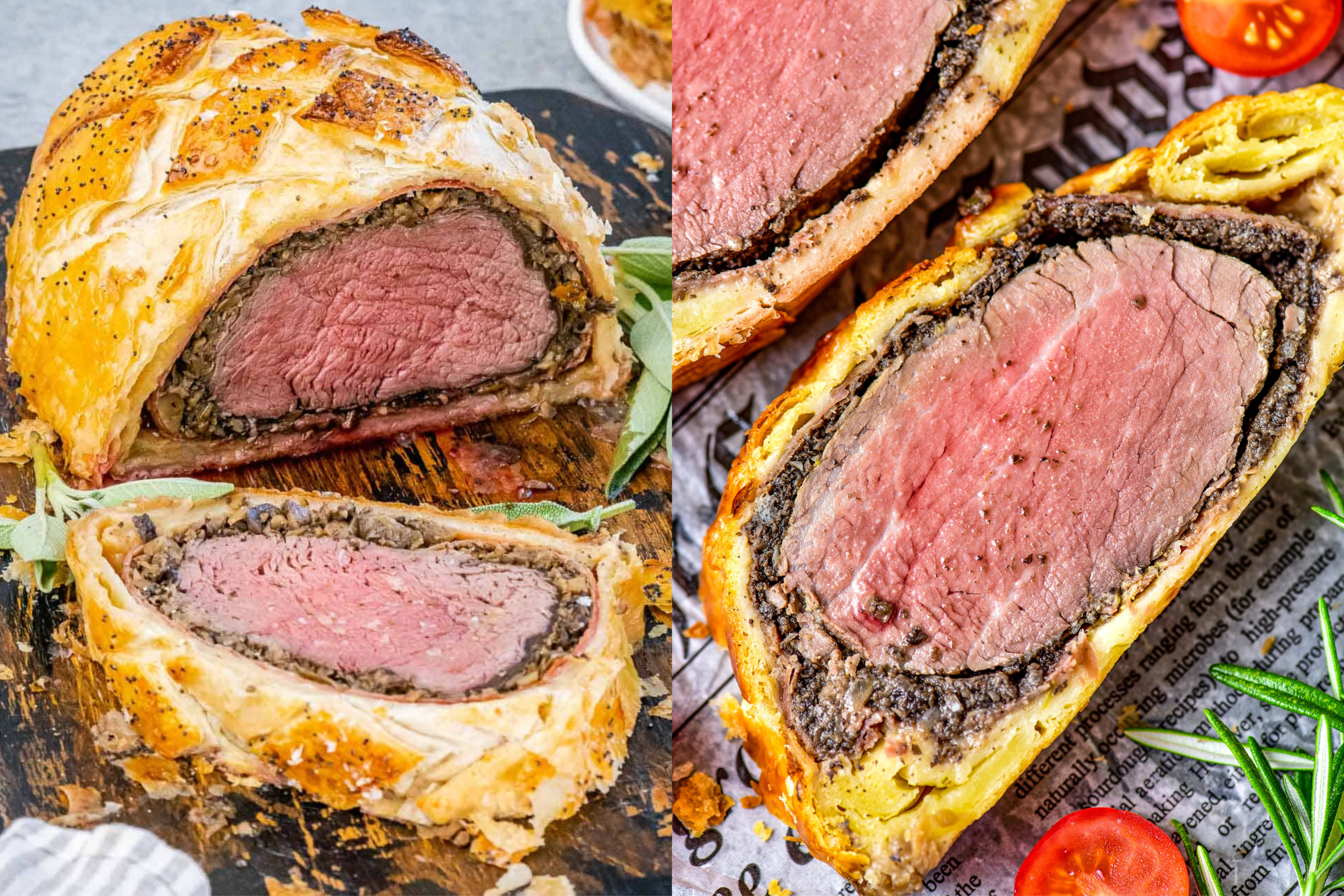
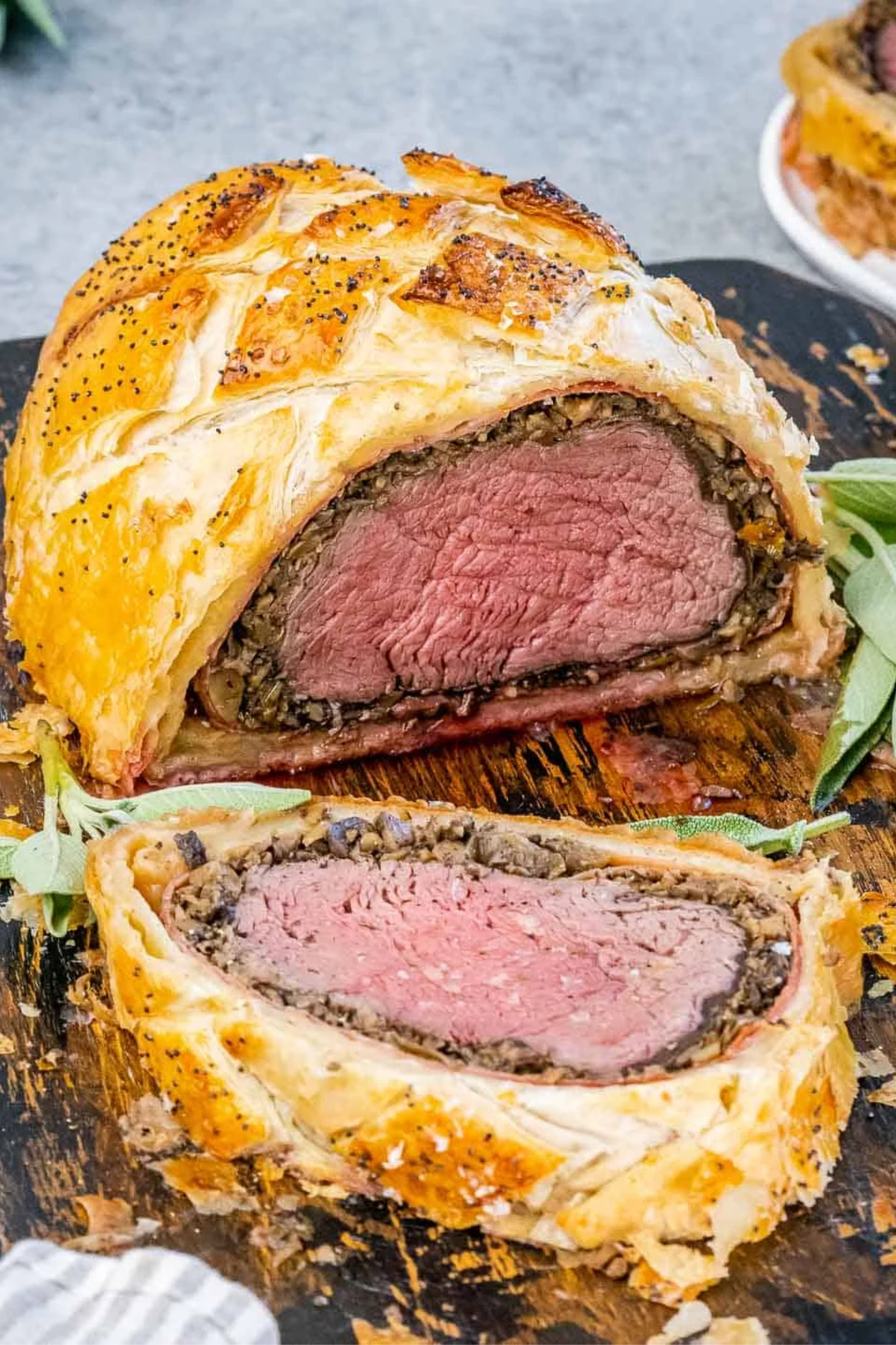
Beef Wellington is an impressive main dish made with tender beef tenderloin, savoury mushroom duxelles, thin slices of prosciutto, and golden, flaky puff pastry. Each layer adds something special, from the rich flavour of the seared beef to the earthy mushrooms and buttery pastry. When sliced, it reveals beautiful layers surrounding a juicy, tender centre.
This classic Beef Wellington recipe is a wonderful choice for Christmas dinner, holiday gatherings, special occasions, or an elegant weekend meal. Although it looks like a restaurant-quality dish, you can prepare it at home with a little patience and some simple kitchen techniques.
The secret to making a good Beef Wellington is preparing each layer properly. The beef needs a good sear, the mushroom mixture must be cooked until most of its moisture has evaporated, and the pastry should be wrapped tightly around the filling. Chilling the assembled Wellington before baking also helps it hold its shape.
Whether you are making Beef Wellington for the first time or preparing it for a special family dinner, this recipe walks you through each step, with helpful tips to make the process easier.
Why You’ll Love This Beef Wellington Recipe
Source: healthyfitnessmeals
- A beautiful centrepiece: The golden puff pastry and tender beef make this dish an impressive addition to any dinner table.
- Rich and savoury flavour: Beef tenderloin, mushrooms, prosciutto, Dijon mustard, and fresh thyme create delicious layers of flavour.
- Flaky pastry: Frozen puff pastry makes preparation easier while giving the Wellington its beautiful golden exterior.
- Perfect for special occasions: It is an excellent main course for Christmas dinner, holiday celebrations, anniversaries, and dinner parties.
- Can be prepared ahead: You can prepare several components in advance, making it easier to manage your cooking on the day.
What Is Beef Wellington?
Beef Wellington is a traditional British-style dish made by wrapping a whole beef tenderloin in layers of mushroom duxelles, often prosciutto, and puff pastry before baking it in the oven.
The beef is first seasoned and seared to develop a browned exterior. It is then coated with Dijon mustard and wrapped in a finely chopped mushroom mixture. Thin slices of prosciutto help hold the mushroom layer around the beef while adding a savoury flavour.
Finally, everything is enclosed in puff pastry and baked until the outside becomes golden and crisp.
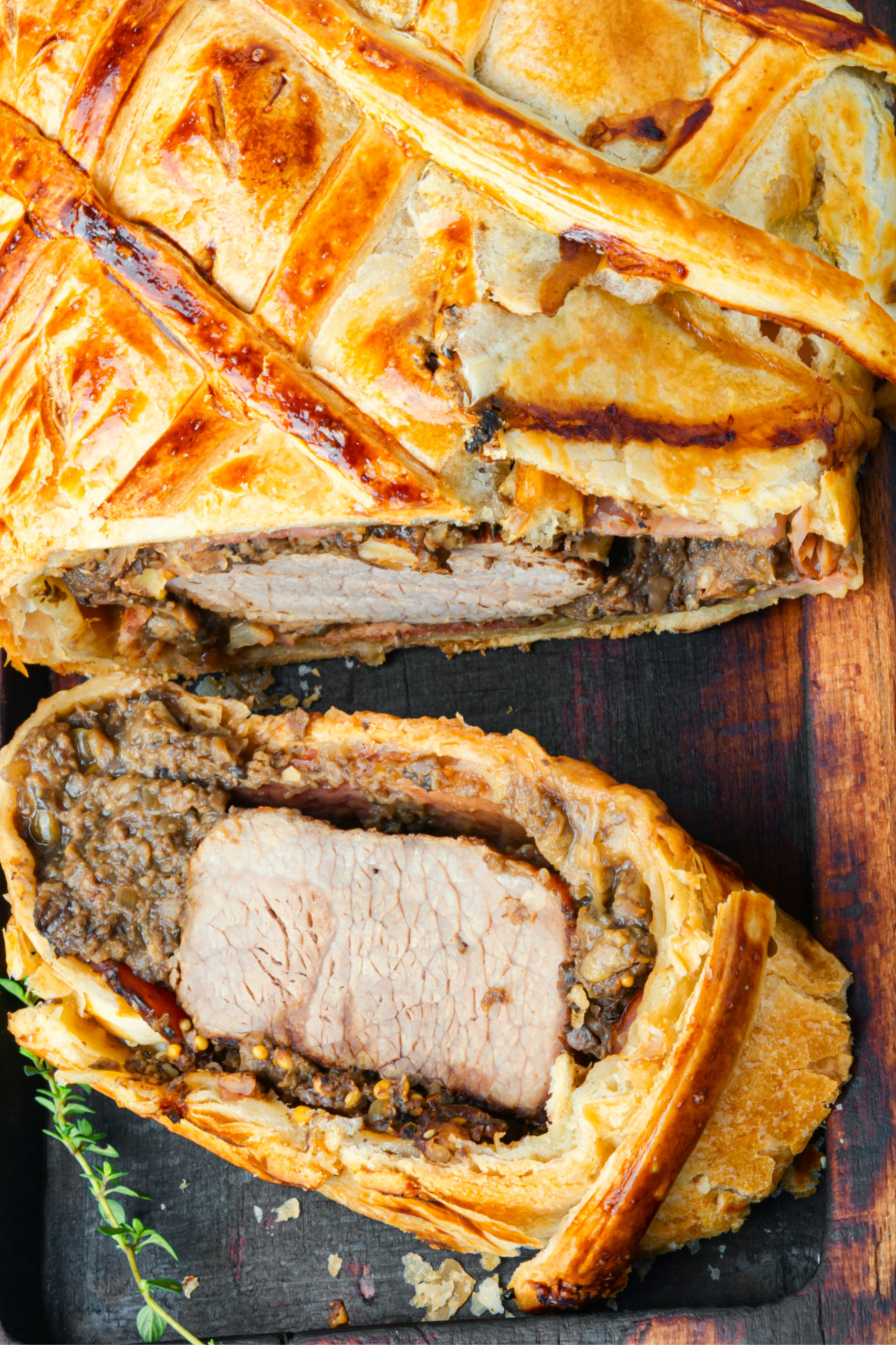
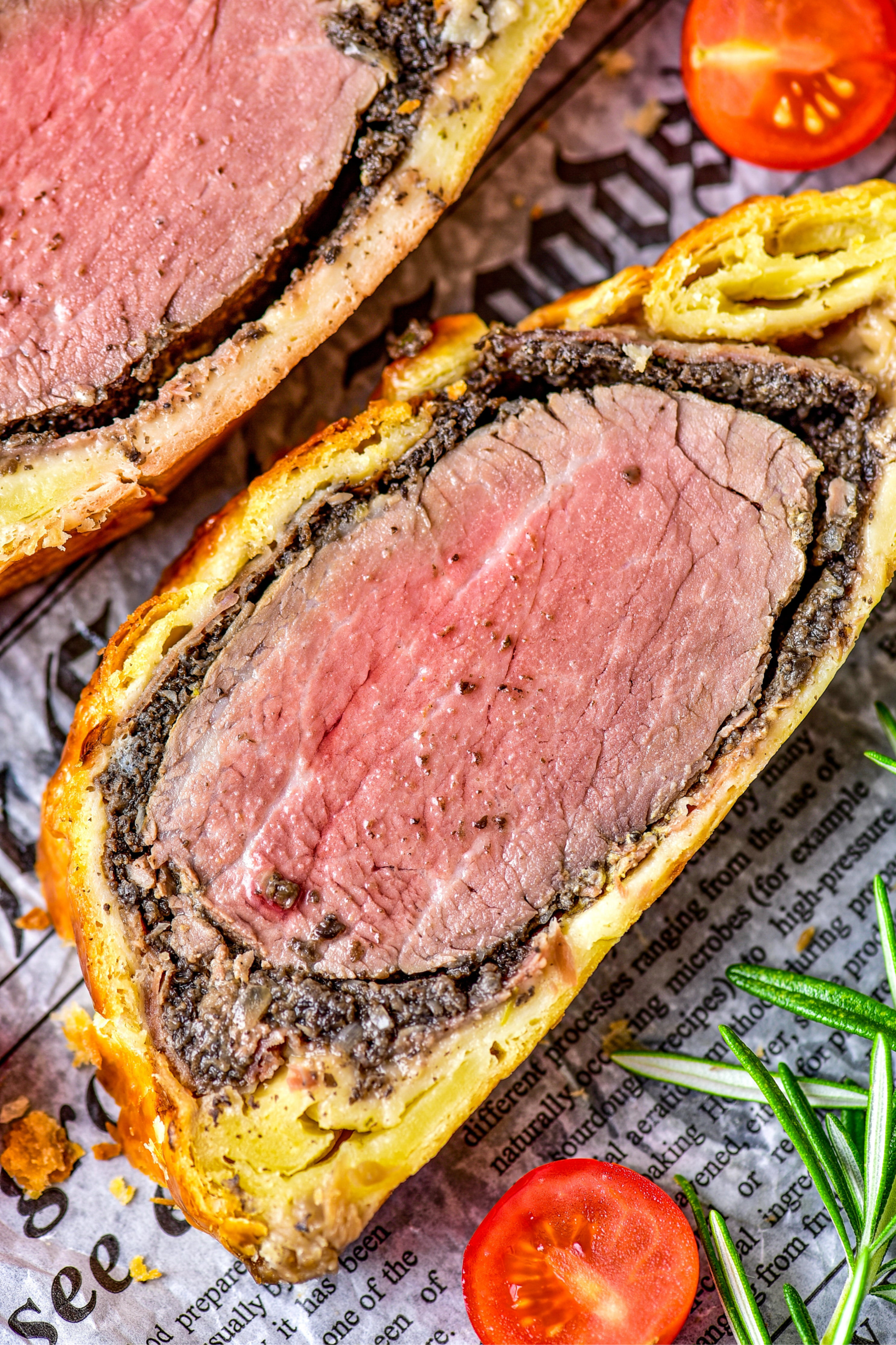
When sliced, a properly cooked Beef Wellington has a beautiful combination of flaky pastry, a savoury mushroom filling, and tender beef in the centre.
Ingredients for Beef Wellington
This recipe makes one large Beef Wellington using a 2 lb. centre-cut beef tenderloin. Each ingredient has a purpose, helping create the flavour, texture, and structure of the finished dish.
| Ingredient | Amount | Purpose |
|---|---|---|
| Centre-cut beef tenderloin | 2 lb. | The main ingredient, providing a tender and juicy centre |
| Kosher salt | As needed | Seasons the beef and mushroom mixture |
| Freshly ground black pepper | As needed | Adds a mild peppery flavour |
| Neutral oil | 1 tsp. | Helps sear the beef evenly |
| Dijon mustard | 2 tbsp. | Adds a tangy flavour to the beef |
| Mixed mushrooms | 1 1/2 lb. | Creates the savoury mushroom duxelles |
| Shallot | 1 | Adds a mild, slightly sweet onion flavour |
| Fresh thyme leaves | From 1 sprig | Adds an earthy, aromatic flavour |
| Unsalted butter | 2 tbsp. | Helps cook the mushroom mixture |
| Prosciutto | 10 thin slices | Wraps the mushroom layer around the beef |
| All-purpose flour | For dusting | Prevents the pastry from sticking |
| Frozen puff pastry | 14 oz. | Creates the golden, flaky outer layer |
| Large egg | 1 | Makes the pastry golden when baked |
| Flaky salt | For sprinkling | Finishes the pastry with a light crunch |
A Few Notes About the Ingredients
Beef tenderloin: Choose a centre-cut beef tenderloin that is approximately 2 lb. and evenly shaped. A consistent thickness helps the beef cook more evenly. Trim away any excess fat or silver skin before preparing it.
Mushrooms: A mixture of mushrooms gives the duxelles a deeper flavour. Cremini, button, shiitake, or other fresh mushrooms can work well. Avoid using mushrooms that are overly wet or watery.
Prosciutto: Thinly sliced prosciutto makes a flexible layer that wraps easily around the mushroom mixture. It also helps create a barrier between the moist filling and the puff pastry.
Dijon mustard: Dijon mustard adds a little sharpness and balances the richness of the beef, mushrooms, and pastry. Spread it over the beef after searing and allowing it to cool slightly.
Puff pastry: Use a 14 oz. sheet or portion of frozen puff pastry, thawed according to the package instructions. Keep it cool while working with it because warm pastry can become difficult to handle.
Fresh thyme: Thyme adds a gentle herbal flavour that works particularly well with mushrooms and beef. Fresh thyme is recommended, but dried thyme can be used in a smaller amount if necessary.
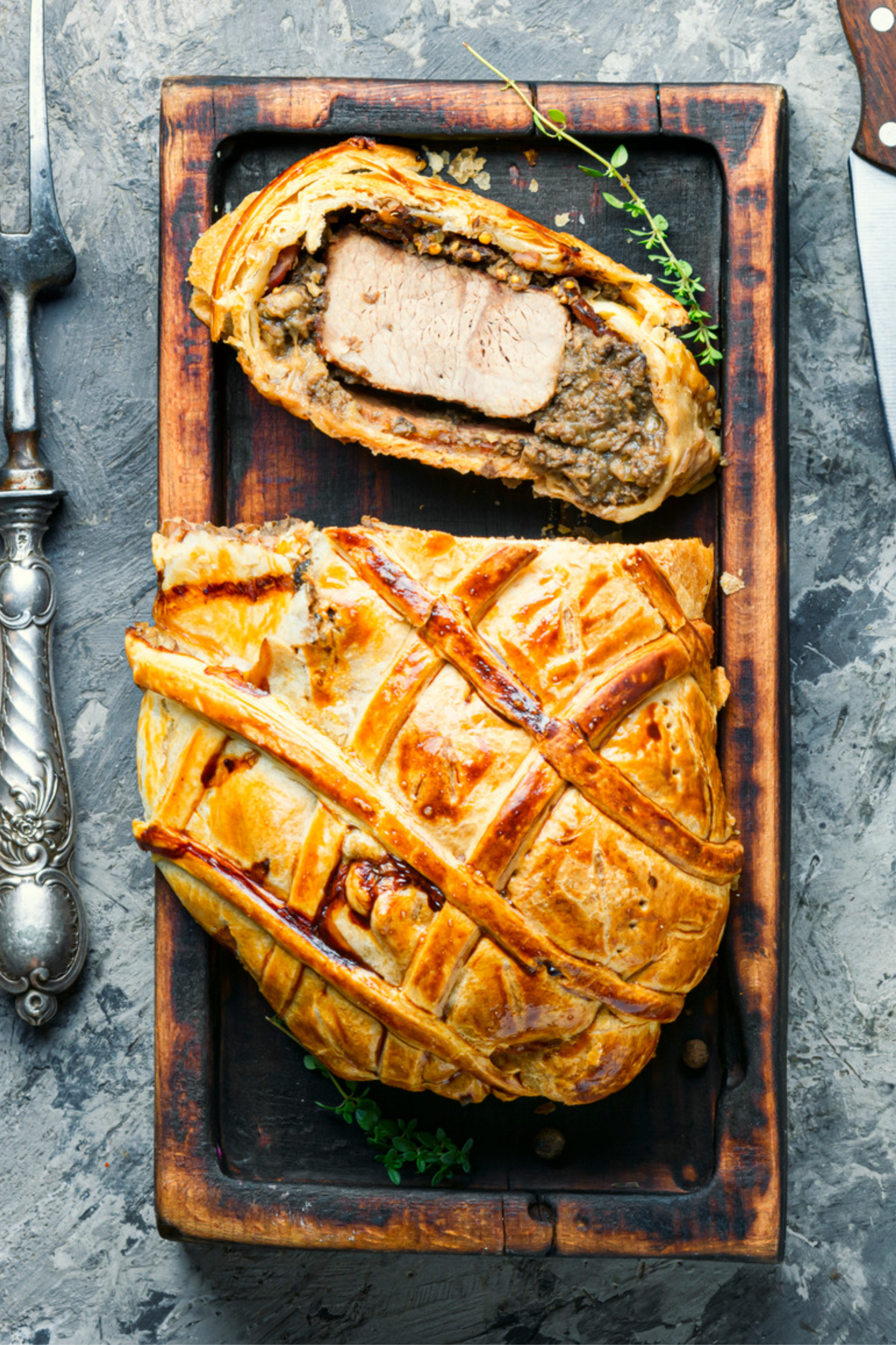
How to Make Beef Wellington
Making Beef Wellington involves several stages, but each one is manageable when prepared in the right order. You will first sear the beef, prepare the mushroom duxelles, wrap the beef in prosciutto, and finally cover everything with puff pastry.
Step 1: Prepare and Sear the Beef
Start by trimming the beef tenderloin if necessary. Use kitchen twine to tie the tenderloin in four places along its length. This helps it maintain an even, compact shape while cooking.
Season all sides generously with kosher salt and freshly ground black pepper.
Heat a heavy skillet over high heat and add the neutral oil. Once the pan is nearly smoking, carefully place the tenderloin in the skillet.
Sear the beef until it is nicely browned on all sides, including the ends. This should take approximately 2 minutes per side.
The goal is to develop a browned exterior rather than cook the beef all the way through. The centre will finish cooking later in the oven.
Transfer the beef to a plate and allow it to cool for approximately 10 to 15 minutes. Once it is cool enough to handle, remove the kitchen twine and brush Dijon mustard over the entire surface.
Place the mustard-coated tenderloin in the refrigerator while preparing the mushroom mixture.
Helpful tip: Make sure the beef is browned on every side, including the narrow ends. This gives it a more developed flavour and helps create a good foundation for the other layers.
Step 2: Prepare the Mushroom Duxelles
The mushroom duxelles is one of the most important parts of Beef Wellington. It is a finely chopped mixture of mushrooms, shallots, and thyme that adds a rich, earthy flavour.
Add the mixed mushrooms, roughly chopped shallot, and fresh thyme leaves to a food processor.
Pulse several times until everything is finely chopped. The mixture should have a fairly even texture without becoming completely smooth.
Place the same skillet used for searing the beef over medium heat. Add the unsalted butter and allow it to melt.
Add the chopped mushroom mixture and season with kosher salt and freshly ground black pepper.
Cook for approximately 10 minutes, stirring occasionally, until most of the moisture has evaporated. The mixture should become thick and start sticking slightly to the bottom of the pan.
Transfer the mushroom duxelles to a bowl and refrigerate until ready to assemble the Wellington.
Helpful tip: Do not rush this step. Mushrooms naturally release a lot of moisture during cooking. If the mixture remains wet, it can make the prosciutto and pastry soggy during baking.
Step 3: Arrange the Prosciutto and Mushroom Mixture
Place a large sheet of plastic wrap on a clean work surface. Overlap additional sheets if necessary so that the plastic wrap is approximately twice the length and width of the beef tenderloin.
Arrange the 10 thin slices of prosciutto on the plastic wrap, slightly overlapping each slice to create a rectangular layer.
The rectangle should be large enough to wrap around the entire tenderloin.
Take the cooled mushroom duxelles from the refrigerator and spread it evenly over the prosciutto. Keep the layer relatively thin so that it wraps neatly around the beef.
Try to spread the mushroom mixture all the way to the edges for an even filling.
Step 4: Wrap the Beef in Prosciutto
Remove the beef tenderloin from the refrigerator and place it along the bottom edge of the prosciutto and mushroom rectangle.
Using the plastic wrap to help guide you, carefully roll the prosciutto and mushroom mixture around the beef.
As you roll, tuck the ends of the prosciutto inward to cover the tenderloin completely.
Continue rolling until the beef is fully enclosed in the mushroom and prosciutto layers.
Twist the ends of the plastic wrap tightly to create a firm, compact cylinder.
Transfer the wrapped beef to the refrigerator and chill until firm.
Why this step matters: Chilling helps the prosciutto and mushroom layer hold its shape around the tenderloin. It also makes the next step easier because the filling will be less likely to move while you wrap the pastry.
Step 5: Prepare the Puff Pastry
Preheat the oven to 425°F (220°C).
Lightly dust a clean work surface with all-purpose flour. Remove the thawed puff pastry from its packaging and roll it into a rectangle large enough to cover the wrapped beef.
The pastry should be slightly larger than the prosciutto rectangle used in the previous step.
Remove the beef from the plastic wrap and place it near the bottom edge of the puff pastry.
Beat the large egg in a small bowl. Brush the egg wash along the remaining three edges of the pastry. This helps the pastry seal securely when rolled.
Step 6: Wrap the Beef in Puff Pastry
Carefully roll the beef tenderloin in the puff pastry until it is completely enclosed.
Try to keep the pastry snug around the filling without stretching it too much. Excessively loose pastry can leave gaps, while stretching it too tightly can cause it to tear during baking.
Trim away any extra pastry so that you have enough to seal the edges neatly.
Use a fork to crimp the edges and seal the pastry securely.
Wrap the entire Wellington in fresh plastic wrap, twisting the ends to create a tight cylinder.
Refrigerate for approximately 20 minutes. This final chilling step helps the pastry maintain its shape and makes it easier to achieve a neat finish.
Step 7: Apply Egg Wash and Score the Pastry
Remove the chilled Wellington from the plastic wrap and place it on a foil-lined baking sheet, with the seam facing down.
Brush the entire outside of the puff pastry with the remaining beaten egg.
Using a sharp knife, lightly score the top of the pastry in a decorative pattern. You can create a few diagonal lines or a simple crisscross design.
Be careful not to cut all the way through the pastry. The purpose is to create a decorative finish rather than expose the filling.
Sprinkle a little flaky salt over the top.
Step 8: Bake the Beef Wellington
Transfer the baking sheet to the preheated oven.
Bake at 425°F (220°C) for approximately 40 to 45 minutes, or until the puff pastry is golden brown and the centre of the beef reaches the desired temperature.
For medium-rare, the recipe uses a target oven-removal temperature of 120°F. Use a reliable meat thermometer inserted into the centre of the tenderloin to check the temperature.
Cooking time can vary depending on the thickness of the beef, its starting temperature, and your oven.
If the pastry becomes golden before the beef reaches your preferred temperature, loosely cover it with foil while it finishes cooking.
Step 9: Rest, Slice, and Serve
Once baked, remove the Beef Wellington from the oven and allow it to rest for 20 minutes before slicing.
Resting is important because it allows the juices to settle and makes the Wellington easier to cut without disturbing its layers.
Use a sharp serrated knife to slice the Wellington into thick portions.
Serve warm while the puff pastry is still crisp and flaky.
Tips for Making the Best Beef Wellington
Beef Wellington has a few important preparation details that can make a noticeable difference in the final result. Paying attention to the moisture, temperature, and pastry wrapping will help you achieve a beautifully baked Wellington.
Source: newsouthcharm
1. Choose an Evenly Shaped Beef Tenderloin
An evenly shaped centre-cut tenderloin is easier to wrap and cook. If one end is significantly thinner than the other, it may cook faster and become more done before the thicker centre reaches the desired temperature.
Tying the beef with kitchen twine before searing helps maintain a more consistent shape.
2. Sear the Beef Properly
Make sure the skillet is hot before adding the tenderloin. A good sear develops a rich, browned exterior and adds flavour to the finished dish.
Avoid overcrowding the pan or moving the beef too frequently. Allow each side to develop a good crust before turning it.
3. Cook the Mushrooms Until Dry
This is one of the most important steps in the recipe.
Mushrooms contain a considerable amount of water, which is released during cooking. If the duxelles is too wet, the moisture can soften the prosciutto and prevent the puff pastry from becoming properly crisp.
Continue cooking until the mixture is thick and most of the liquid has evaporated.
4. Allow the Ingredients to Cool
Before assembling the Wellington, make sure the seared beef and mushroom mixture have cooled sufficiently.
Warm ingredients can soften the puff pastry and make it difficult to handle. Keeping the filling cool also helps the layers remain in place during assembly.
5. Wrap Everything Tightly
Use plastic wrap to help create a compact shape when rolling the beef in prosciutto and mushroom duxelles.
Repeat the same technique when wrapping the beef in puff pastry. A tight, even cylinder helps the Wellington bake more consistently and gives you attractive slices.
6. Keep the Puff Pastry Cold
Puff pastry contains layers of dough and fat that create its flaky texture during baking. If it becomes too warm before going into the oven, the butter can soften and affect how the pastry rises.
If the pastry becomes sticky or difficult to handle, place it in the refrigerator for a few minutes before continuing.
7. Use a Meat Thermometer
A meat thermometer is one of the most useful tools when preparing Beef Wellington.
Because the beef is enclosed in several layers, it is difficult to judge its doneness by looking at the pastry alone.
Insert the thermometer into the centre of the beef through an end or another suitable position, avoiding unnecessary damage to the pastry.
For food safety, remember that the recipe’s 120°F removal temperature is a culinary medium-rare target, not the USDA-recommended safe minimum for whole cuts of beef. USDA guidance recommends 145°F followed by a three-minute rest. Choose your desired doneness with this distinction in mind.
What to Serve with Beef Wellington
Beef Wellington is rich and filling, so it pairs particularly well with vegetable side dishes, roasted potatoes, fresh salads, and light sauces.
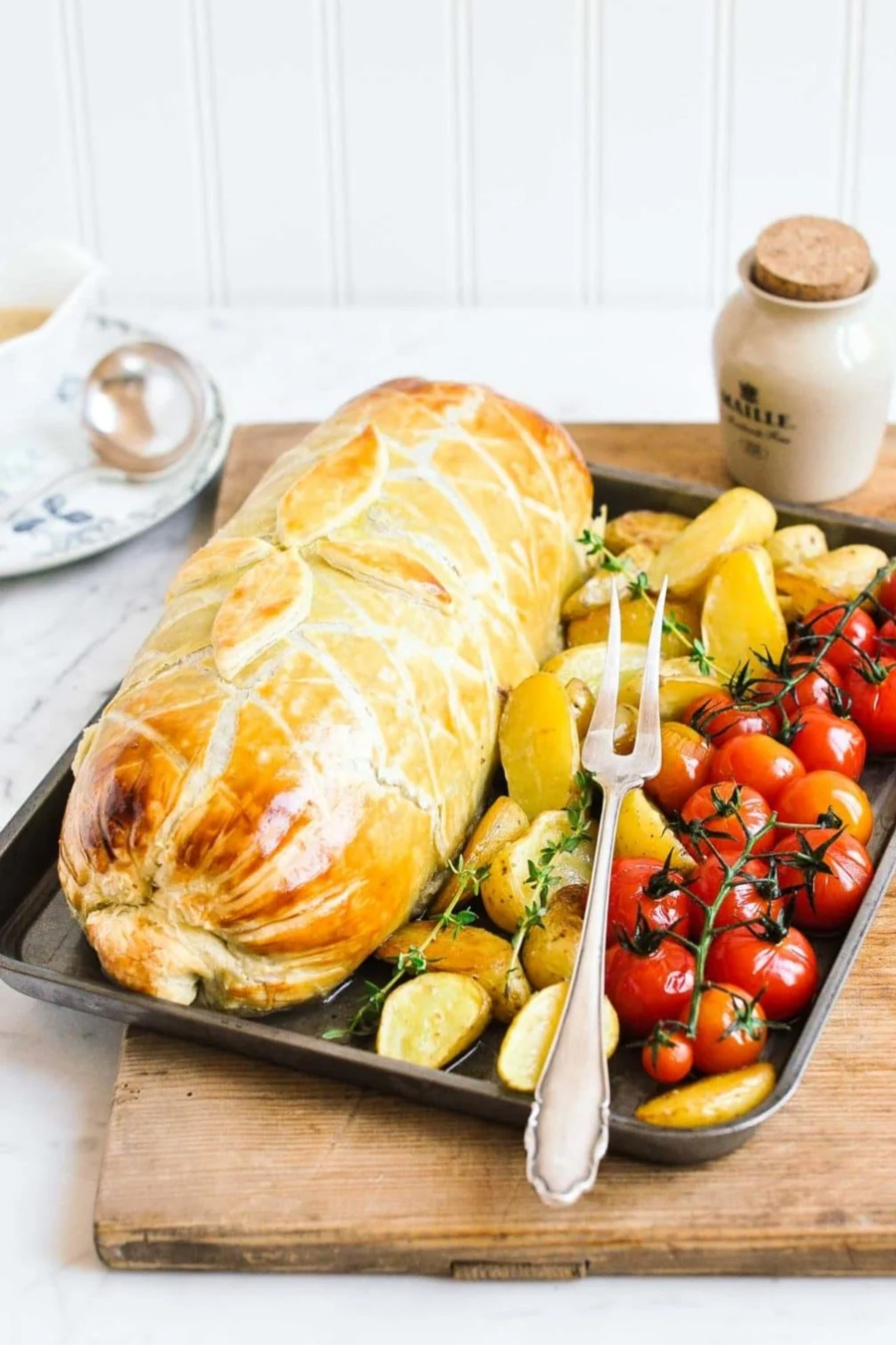
Source: eatlittlebird
If you are serving it for Christmas dinner or a special occasion, you can combine a few sides to create a complete meal.
| Side Dish | Why It Pairs Well |
|---|---|
| Roasted potatoes | Crispy edges and soft centres complement the tender beef |
| Garlic mashed potatoes | Creamy potatoes balance the flaky pastry and savoury filling |
| Roasted carrots | Their natural sweetness works well with the rich beef |
| Green beans | Add freshness, colour, and a light vegetable side |
| Brussels sprouts | Their roasted flavour complements the mushrooms and beef |
| Asparagus | A simple vegetable side that keeps the plate balanced |
| Garden salad | Adds a fresh, crisp contrast to the rich main course |
| Red wine sauce | Provides a deep, savoury flavour that pairs beautifully with beef |
Sauces to Serve with Beef Wellington
Although Beef Wellington has plenty of flavour on its own, a sauce can make the dish even more enjoyable.
- Red wine sauce: A rich, savoury sauce made with red wine and beef stock is a classic pairing.
- Madeira sauce: A traditional-style accompaniment with a deep flavour that complements beef tenderloin.
- Peppercorn sauce: A creamy sauce with black pepper adds warmth and a little spice.
- Horseradish cream: A lighter, tangy option that balances the richness of the pastry and beef.
For a special dinner, red wine sauce is an excellent choice, especially when served alongside roasted vegetables and potatoes.
Can You Make Beef Wellington Ahead of Time?
Yes. Preparing Beef Wellington ahead of time can make serving it much easier, especially when you are cooking for guests.
The beef can be seared, coated with Dijon mustard, and refrigerated ahead of assembly. You can also prepare the mushroom duxelles in advance and store it in an airtight container in the refrigerator.
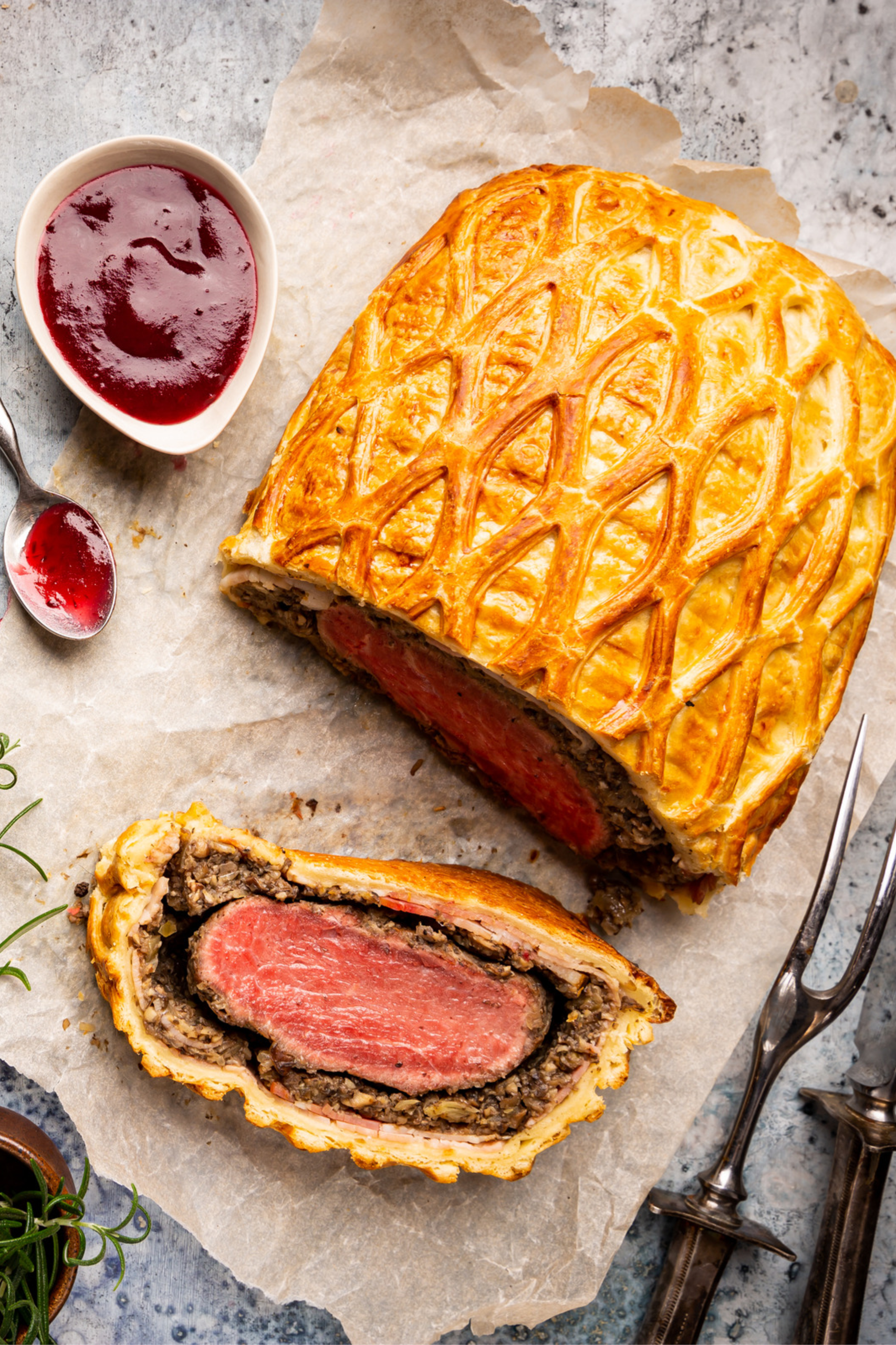
The prosciutto and mushroom wrapping can be completed ahead of time as well. Keep the wrapped beef refrigerated until you are ready to cover it with puff pastry.
For the best pastry texture, assemble the final puff pastry layer relatively close to baking time. Once assembled, keep it chilled and bake according to the recipe.
Avoid leaving the assembled Wellington at room temperature for extended periods.
Common Beef Wellington Mistakes to Avoid
Even though the ingredients are relatively simple, a few mistakes can affect the texture and appearance of Beef Wellington.
| Common Mistake | How to Avoid It |
|---|---|
| Using wet mushroom duxelles | Cook the mushrooms until most of their moisture evaporates |
| Not searing the beef properly | Preheat the skillet and brown every side of the tenderloin |
| Wrapping warm ingredients | Allow the beef and mushroom mixture to cool before assembly |
| Using too much mushroom filling | Spread a thin, even layer over the prosciutto |
| Leaving gaps in the pastry | Wrap tightly and seal the edges with egg wash |
| Working with warm pastry | Keep the puff pastry chilled until ready to use |
| Overbaking the beef | Check the centre temperature with a meat thermometer |
| Cutting immediately after baking | Rest for 20 minutes before slicing |
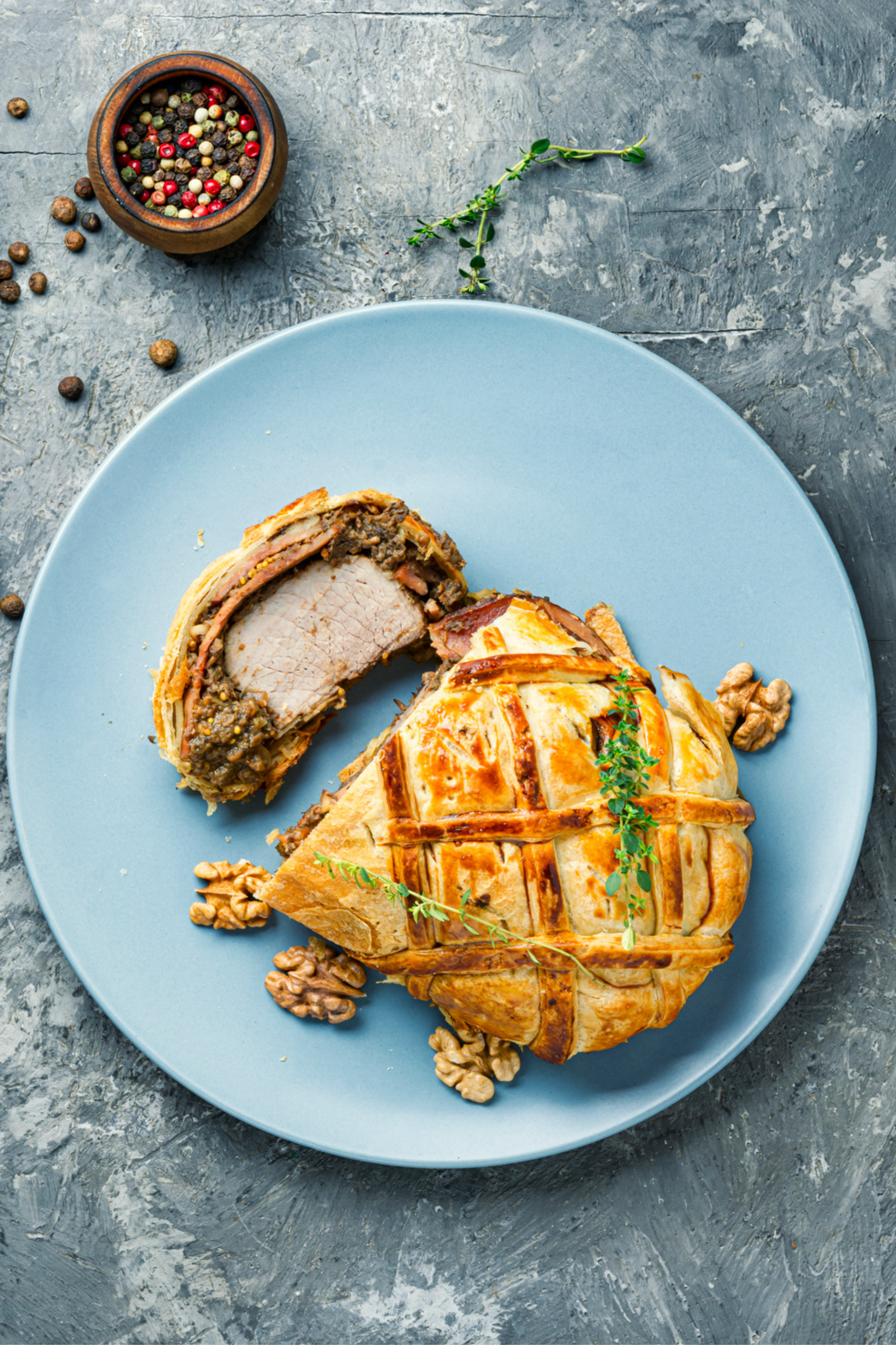
How to Store Leftover Beef Wellington
If you have leftover Beef Wellington, allow it to cool slightly before storing it in the refrigerator.
Refrigerator: Place leftover slices in an airtight container and refrigerate within two hours of cooking. For best quality, enjoy them within 3 to 4 days.
Freezer: You can freeze leftover portions in freezer-safe wrapping or airtight containers. The pastry may lose some of its original crispness after thawing, but the beef can still be enjoyed. Use within 2 to 3 months for best quality.
Reheating: Place refrigerated slices on a baking sheet and warm them in an oven at approximately 325°F (165°C) until heated through. Avoid using the microwave if you want to preserve the flaky pastry texture.
For food safety, reheat leftovers to 165°F (74°C).
Frequently Asked Questions (FAQ)
What cut of beef is best for Beef Wellington?
Beef tenderloin is the best choice for this recipe because it is naturally tender and has a relatively even shape. A centre-cut tenderloin is particularly suitable because it helps the Wellington cook more evenly and creates attractive slices.
Why is my Beef Wellington pastry soggy?
Soggy pastry is usually caused by excess moisture in the mushroom duxelles or warm ingredients during assembly. Mushrooms release a lot of liquid as they cook, so it is important to cook the mixture until most of the moisture has evaporated.
Allow the beef and mushroom mixture to cool before wrapping everything in pastry.
Can I use store-bought puff pastry?
Yes. Frozen store-bought puff pastry works very well for this recipe and makes preparation easier. Choose a good-quality pastry and allow it to thaw according to the package instructions before rolling.
Keep it chilled while assembling the Wellington.
What temperature should Beef Wellington be cooked to?
The recipe uses an oven-removal temperature of 120°F for a medium-rare result, followed by a 20-minute resting period. However, carryover cooking does not guarantee that the beef will reach a food-safe temperature.
For food safety, the USDA recommends cooking whole cuts of beef to an internal temperature of 145°F followed by a three-minute rest. Use a meat thermometer to monitor the centre.
How long does Beef Wellington take to cook?
This recipe takes approximately 40 to 45 minutes to bake at 425°F (220°C). The exact time depends on the thickness of the tenderloin, the temperature of the beef before baking, and your oven.
Always check the internal temperature rather than relying on cooking time alone.
Can I prepare Beef Wellington the night before?
Yes, you can prepare several components the night before. The mushroom duxelles can be cooked and refrigerated, and the beef can be seared and coated with mustard ahead of time.
You can also complete the prosciutto wrapping and refrigerate it. For the best pastry results, finish the puff pastry wrapping closer to baking time.
Can I make Beef Wellington without prosciutto?
Yes. Prosciutto is commonly used to create a savoury layer between the mushroom duxelles and puff pastry, but you can leave it out.
However, the recipe will need an alternative approach to help manage moisture and keep the mushroom mixture contained. Make sure the duxelles is cooked particularly well before wrapping the beef.
Why does Beef Wellington need to rest after baking?
Resting allows the juices inside the beef to settle and makes the Wellington easier to slice. Cutting it immediately can cause more juices to escape and may disturb the layers.
Allow it to rest for approximately 20 minutes before carving.
How do I keep Beef Wellington from falling apart when slicing?
Chilling the wrapped beef before baking, sealing the pastry properly, and allowing the Wellington to rest after cooking all help it hold together.
Use a sharp serrated knife and cut gently rather than pressing down too hard.
Can I freeze Beef Wellington?
You can freeze cooked leftover Beef Wellington in individual portions. Wrap each portion securely and place it in a freezer-safe container.
The pastry may become softer after thawing and reheating, but the leftovers can still be enjoyed.
What mushrooms are best for Beef Wellington?
Cremini and button mushrooms are good choices because they have a mild, earthy flavour. You can also combine them with shiitake or other varieties for a deeper mushroom flavour.
The most important thing is to cook the mushrooms until the excess moisture has evaporated.
What should I serve with Beef Wellington for Christmas dinner?
Roasted potatoes, garlic mashed potatoes, roasted carrots, green beans, Brussels sprouts, and asparagus are all excellent choices.
You can also serve a red wine sauce or Madeira sauce alongside the Wellington for a more traditional special-occasion dinner.
Final Thoughts
Beef Wellington is a beautiful main course that brings together tender beef, savoury mushrooms, prosciutto, and golden, flaky puff pastry. Although it involves a few preparation steps, taking your time with each layer makes the process much easier. The combination of flavours and textures creates a delicious dish that looks just as impressive as it tastes.
The most important details are searing the beef properly, cooking the mushroom duxelles until most of the moisture has evaporated, keeping the pastry cold, and using a meat thermometer to check the centre. These small details help you achieve a well-prepared Wellington with a crisp pastry exterior and tender beef inside.
Another great thing about this recipe is that you can prepare some of the components ahead of time. The mushroom mixture and seared beef can be made in advance, which helps make the final assembly easier, especially when cooking for guests or planning a special dinner.
Serve your Beef Wellington with roasted vegetables, creamy mashed potatoes, roasted potatoes, or your favourite sauce for a complete meal. Allow it to rest before slicing, then arrange the portions on a serving platter. Whether you are making it for Christmas dinner, a holiday gathering, or another special occasion, this classic recipe makes a wonderful centrepiece for the table.
Try out more recipes:
Sweet Potato Casserole Recipe with Brown Sugar Pecan Topping
Classic Green Bean Casserole Recipe (Easy, Creamy & Crispy)
Easy Homemade Cranberry Sauce Recipe (Sweet, Tangy & Perfect for Thanksgiving)
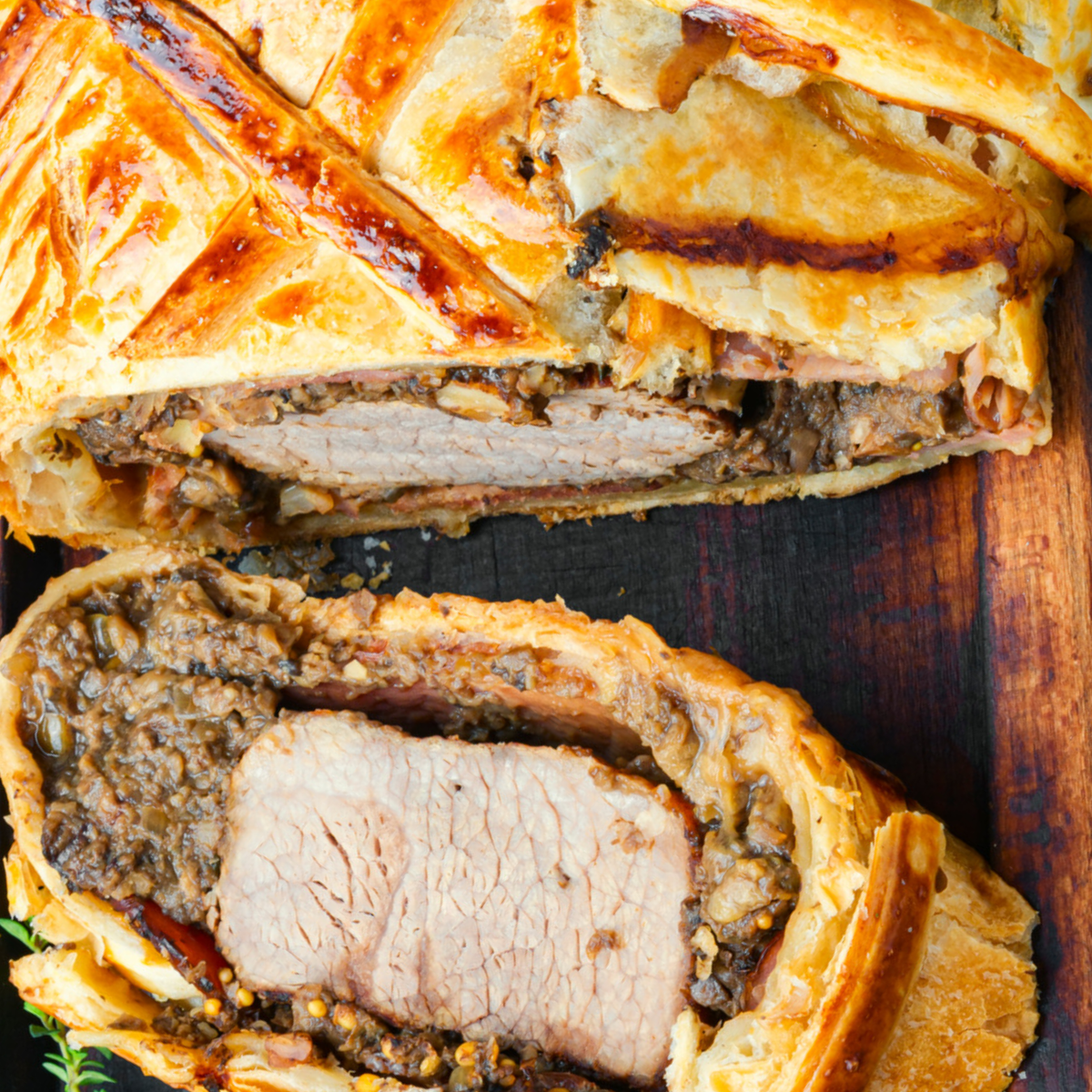
Classic Beef Wellington
A tender beef tenderloin wrapped in mushroom duxelles, prosciutto, and golden puff pastry. An elegant main dish for Christmas dinner and special occasions.
Ingredients
- 1 centre-cut beef tenderloin2 lb., trimmed
- Kosher saltto taste
- Freshly ground black pepperto taste
- 1 tsp. neutral oil
- 2 tbsp. Dijon mustard
- 1 1/2 lb. mixed mushroomsroughly chopped
- 1 shallotroughly chopped
- Leaves from 1 thyme sprig
- 2 tbsp. unsalted butter
- 10 thin slices prosciutto
- All-purpose flourfor dusting
- 14 oz. frozen puff pastrythawed
- 1 large eggbeaten
- Flaky saltfor sprinkling
Instructions
-
Tie the beef tenderloin in four places using kitchen twine. Season generously with salt and pepper.
-
Heat neutral oil in a heavy skillet over high heat. Sear the beef on all sides, including the ends, for approximately 2 minutes per side. Transfer to a plate and cool for 10 to 15 minutes. Remove the twine and coat the beef with Dijon mustard. Refrigerate.
-
Pulse the mushrooms, shallot, and thyme in a food processor until finely chopped.
-
Melt butter in the same skillet over medium heat. Add the mushroom mixture, season with salt and pepper, and cook for approximately 10 minutes until most of the moisture evaporates. Transfer to a bowl and refrigerate.
-
Arrange the prosciutto slices on overlapping plastic wrap to form a rectangle. Spread the cooled mushroom mixture evenly over the prosciutto.
-
Place the beef at the bottom of the prosciutto rectangle. Roll tightly around the beef, tucking in the ends. Twist the plastic wrap into a firm cylinder and refrigerate.
-
Preheat the oven to 425°F (220°C). Roll the puff pastry on a lightly floured surface into a rectangle large enough to cover the beef. Remove the plastic wrap from the beef and place it on the pastry. Brush the remaining pastry edges with egg wash.
-
Roll the beef tightly in the pastry. Trim excess pastry and crimp the edges with a fork. Wrap in plastic wrap and refrigerate for 20 minutes.
-
Remove the plastic wrap and place the Wellington on a foil-lined baking sheet. Brush with egg wash, score lightly with a sharp knife, and sprinkle with flaky salt.
-
Bake for approximately 40 to 45 minutes, checking the centre with a meat thermometer. The recipe’s medium-rare removal target is 120°F. Rest for 20 minutes before slicing. For food safety, USDA guidance recommends 145°F followed by a three-minute rest.
Notes
Cook the mushroom mixture until it is very dry to help prevent soggy pastry.
Keep the puff pastry cold while assembling.
Use a meat thermometer to check the beef rather than relying only on baking time.
Rest the Wellington before slicing to help preserve its shape and juices.